
Black Friday is on 27 November this year, with Cyber Monday on 30 November. Most warnings are about personal shopping, but the same weeks bring scams aimed at businesses. Staff are busy, orders and deliveries are arriving, and a rushed "can you pay this today?" is easier to believe.
What it costs
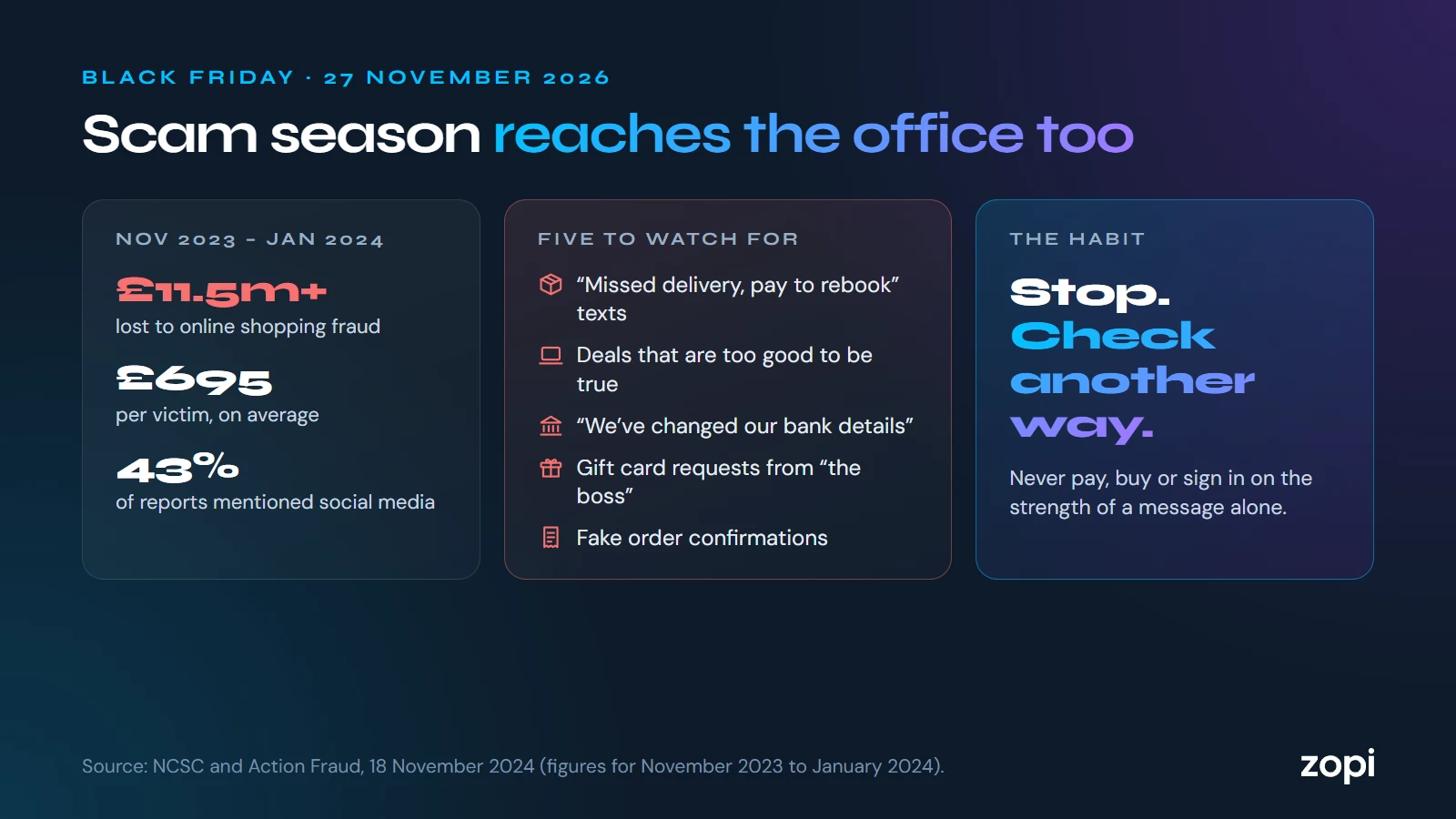
In the most recent figures the NCSC and Action Fraud have published, shoppers reported losing over £11.5 million to online fraud between November 2023 and January 2024, £695 per victim on average. 43% of reports mentioned a social media platform. Those are personal shoppers, but the tricks behind them are the same ones that reach your inbox at work.
Five scams to watch for
- Fake delivery texts and emails. "We missed you, pay a small fee to rebook." The fee is tiny; the real aim is your card details.
- Deals that are too good. Cheap laptops, phones or printer ink on social media or a lookalike website. The money goes and the goods never arrive.
- Changed bank details. An email that seems to be from a supplier, saying they've changed banks and asking you to pay the next invoice to a new account.
- Gift card requests. A message that looks like it's from the boss, asking someone to buy gift cards for clients and send the codes over, quickly and quietly.
- Fake order confirmations. "Your order for £849 is confirmed. Not you? Click here to cancel." The link leads to a fake Microsoft 365 sign-in page, or the attachment installs something nasty.
The habit that stops most of them
Every one of these relies on you acting on the message alone. So when a message asks you to pay, buy or sign in, stop, and check another way: call the supplier on a number you already have, ask the boss in person, or go to the website by typing its address yourself. As the NCSC puts it, if something doesn't feel right, stop, break contact and don't click any links.
Before 27 November
- Tell your team about these five, especially anyone who pays invoices or orders supplies.
- Agree a rule: a change of bank details is always checked by phone before anyone pays.
- Turn on two-step sign-in for Microsoft 365, so a stolen password alone isn't enough.
- Pay by card, not bank transfer, when buying from somewhere new.
- Report it: forward suspicious emails to report@phishing.gov.uk and texts to 7726.
Need a hand?
Zopi IT support includes email security that filters phishing before it reaches your team, and we can train your staff with realistic practice phishing emails. Call us on 0204 502 1288.