
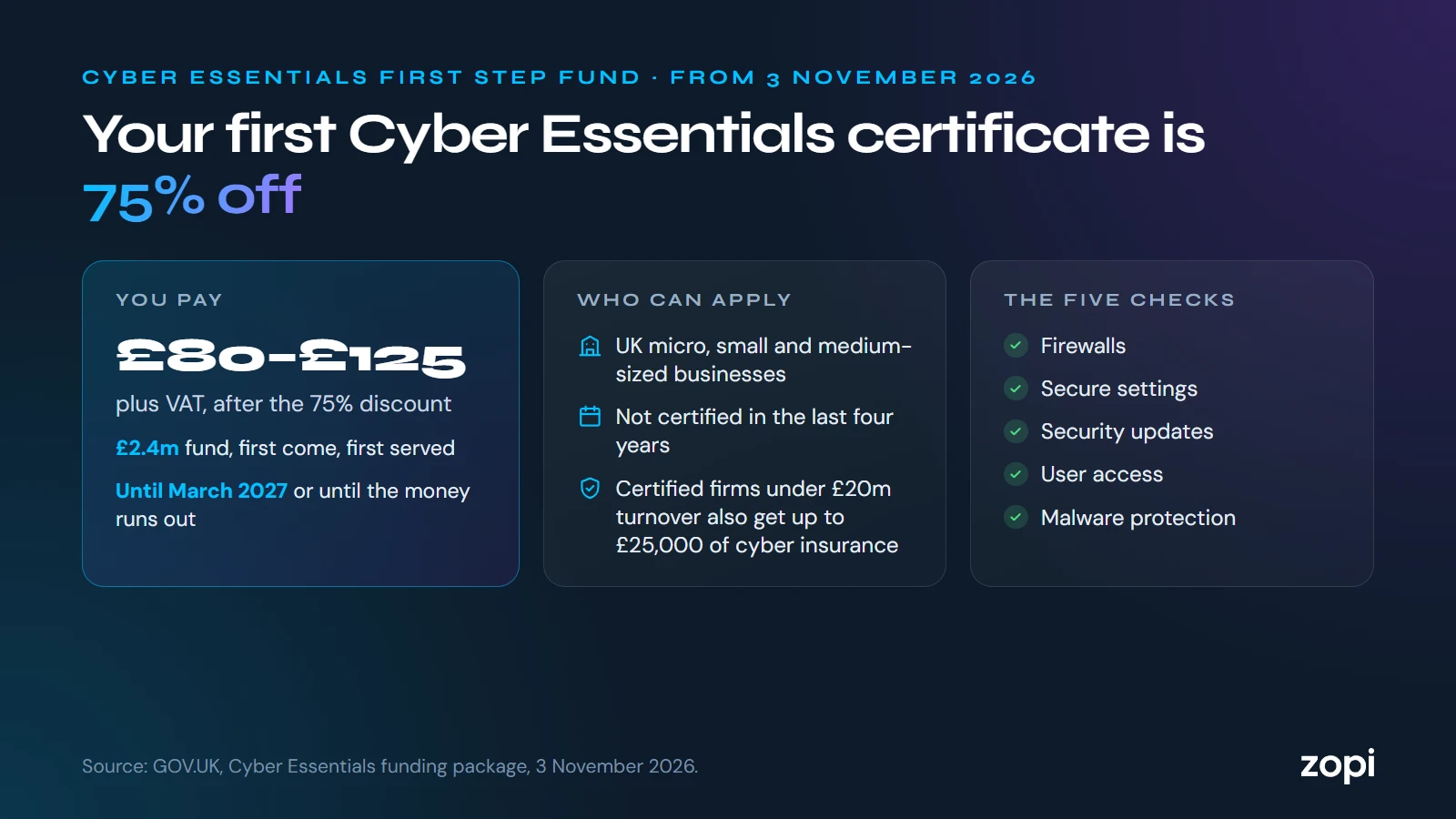
The government will now pay 75% of the cost of a first Cyber Essentials certificate for small and medium-sized UK businesses. With the discount, the certificate costs between £80 and £125 plus VAT. The money is limited: the £2.4 million fund is first come, first served, and closes at the end of March 2027 or sooner if it runs out. If you've been meaning to get certified, this is the cheapest it is likely to be.
What's on offer
The Cyber Essentials First Step Fund opened on 3 November. It takes 75% off the price of a new certificate, so you pay as little as £80 and no more than £125, plus VAT. The government expects about 6,000 businesses to use it. It covers the assessment and, if you pass, the certificate itself. It doesn't guarantee a pass, so it's worth getting ready before you apply.
You can apply if you are a micro, small or medium-sized UK business and you haven't held Cyber Essentials in the last four years. You can go through IASME, which runs the scheme for the government, or through another certification body.
Why it's worth having
Cyber Essentials is the government-backed baseline for keeping out the most common attacks. It checks five things:
- Firewalls: a filter between the internet and your computers;
- Secure settings: computers and devices set up so there are fewer ways in;
- Security updates: software kept up to date so known flaws can't be used;
- User access: people only get the access to data and systems that they need;
- Malware protection: viruses and other harmful software are spotted and stopped.
Businesses with turnover under £20 million that certify also get up to £25,000 of cyber liability insurance.
The warning behind it
The discount came out the same day as the National Cyber Security Centre's annual review. The NCSC warned that criminals using AI will find and use old, unfixed weaknesses faster than before. Its chief executive, Richard Horne, said businesses should treat Cyber Essentials as "the starting point for cyber security, not the end goal".
What to do next
- Check if you qualify: you need to be a UK business that hasn't been certified in the last four years;
- Get ready first: make sure every computer is getting security updates, and switch off accounts for people who have left;
- Apply early: the fund is first come, first served, and closes when the money runs out;
- Don't stop there: the NCSC sees the certificate as a baseline, so keep updates and access checks going all year.
How Zopi can help
We can check your computers, accounts and settings against the five Cyber Essentials checks, fix anything that would fail, and help you through the application. Have a look at our cyber security services, or call us on 0204 502 1288 for a free, no-obligation chat.
Sources
- New government-backed cyber security protections could save UK businesses thousands, GOV.UK, 3 November 2026
- Cyber Essentials funding package, GOV.UK, 3 November 2026
- Cyber chief: UK facing AI-powered attacks on critical infrastructure in two years, NCSC, 3 November 2026
- Apply for the Cyber Essentials First Step Fund, IASME